
Use this guide to check the connections between your profile, website, public listings, and actual customer inquiries. Then use the 30-day plan to compare audit proposals, assign implementation responsibilities, and decide whether you need a diagnosis, hands-on support, or both.
Separate visibility loss from lost inquiries
Start with a specific symptom: fewer calls from Google’s Map Pack, fewer visits from local organic results, or fewer qualified inquiries despite steady traffic. Export matching date ranges from Business Profile performance, Search Console, and lead records. Compare equivalent weekdays and note holidays, seasonal demand, tracking changes, and revised hours. Business Profile data includes Search and Maps, not just the Map Pack.
A ranking drop and a lead drop are different problems. Record the query, search location, device, and date before comparing competitors; a search from your office is not a market-wide baseline. Google’s local ranking guidance identifies relevance, distance, and prominence. Separate changes you can address from distance you cannot remove by editing a profile.
If the profile has disappeared, is unverified, or is suspended, begin with missing Google Maps listing troubleshooting. Otherwise, assess the complete profile-to-inquiry chain. For a purchase decision, request a sample finding that includes evidence, business impact, an implementation owner, and a retest—not just a score or a budget estimate.
Build an audit matrix with evidence and owners
Build one matrix with four rows: Business Profile, linked website page, important citations, and calls/forms. Each row needs the observed signal, expected state, evidence, priority, owner, and acceptance test. The consultant diagnoses; the business owner confirms operating facts; developers handle technical changes; editors own customer-facing copy.
Verify eligibility before optimizing. Under Google’s business representation guidelines, a storefront must genuinely receive customers, have permanent signage, and be staffed during its stated hours. A service-area business should hide its address when customers are not served there. A hybrid business can display an eligible storefront and list service areas. A mailbox or unstaffed virtual office is not a valid customer location. An online-only business does not become eligible by choosing a service area.
Choose the primary category for the main business, not a keyword wish list. Use the most specific accurate option available in your market. Add secondary categories only for services actually provided and supported by available categories. Capture current settings before proposing edits. The owner should approve changes; the consultant should document the service evidence behind each one. Adding more service areas does not remove Google’s distance factor.
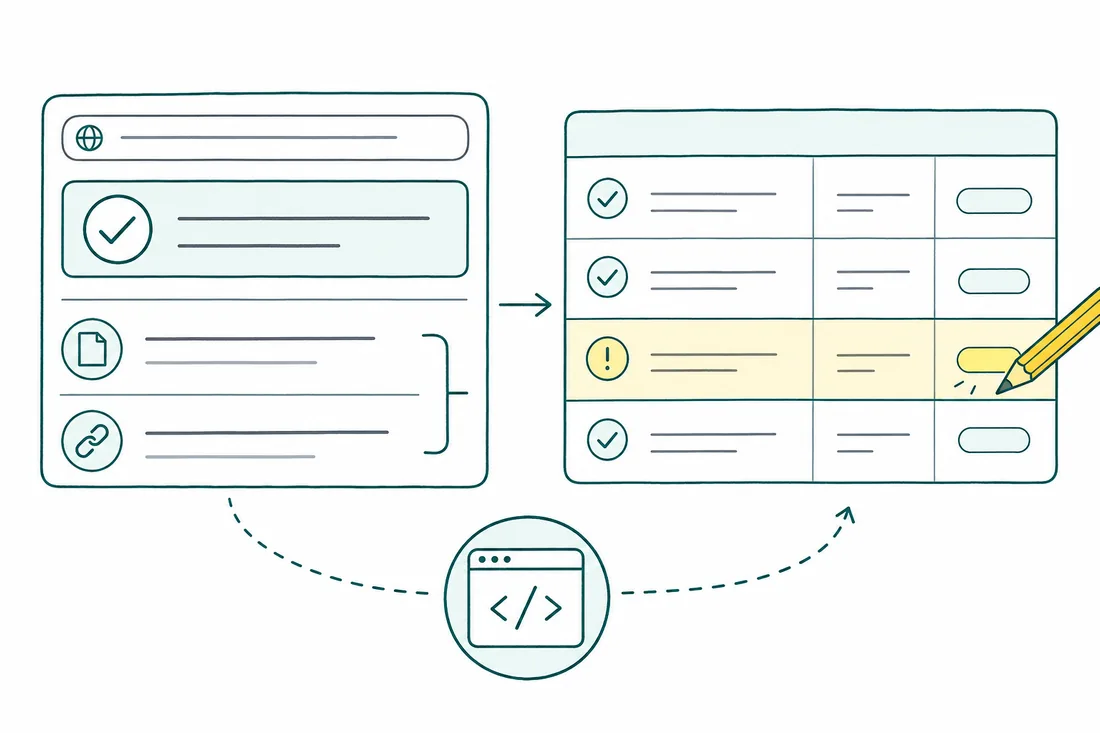
Trace the profile link through to a real inquiry
Open the exact Website link in the profile on a phone, not a URL copied from memory. Follow redirects and record the final host, path, and tracking parameters. Does a customer reach the right branch and service, or a generic page for another market? A relevant homepage can work for one location; multiple staffed locations often need distinct destination pages.
Have the developer compare the final HTTP status, robots directives, and canonical URL in both HTML and headers. The page should be crawlable and indexable, with no accidental canonical pointing to another branch. A tracking URL can legitimately canonicalize to its clean equivalent. The editor should verify visible services, hours, phone number, and address or service-area wording.
Test tap-to-call, forms, booking links, and mobile error states through to the business’s actual inbox or call handling. A call-button click is not a connected call; a form event is not necessarily a received inquiry. Mark test leads, avoid sending personal details to analytics, and compare channel reports with real lead records before declaring a conversion improvement.
Compare citations and competitors without chasing scores
Audit citations against one owner-approved business record. Prioritize major map services, industry directories, and listings that send referrals. Flag old phone numbers, former addresses, duplicate records, and URLs pointing to the wrong branch. Formatting differences alone are not a diagnosis. If call tracking is used, check that the underlying business number and branch identity remain clear rather than declaring every number variation an error.
For competitor gaps, inspect businesses serving comparable customers near the same search location. Record publicly visible categories, service coverage, review recency, and recurring review themes. Do not claim to know every competitor’s secondary category from its public listing. Compare evidence of specific work, responsiveness, and customer concerns—not just star averages. A larger review count does not prove what caused a ranking difference.
Use gaps to improve truthful service information and request honest reviews without incentives or selective requests only to happy customers. Never copy reviews or invent locations. Assign review responses to someone who can resolve issues. Expand service-area pages only when the business genuinely serves those areas and can provide useful, distinct information.
Turn findings into a 30-day action plan
Days 1–7: preserve baseline exports and screenshots, confirm access, and get approval for operating facts. Address policy risks, wrong destination URLs, and broken lead delivery before cosmetic improvements. Avoid changing the name, address, and categories merely to test rankings; significant profile edits can require reverification. Give every task one accountable owner and a clear dependency.
Days 8–21: have the developer repair redirects, indexing conflicts, and contact failures. Have the editor align branch details and real service information; the business owner handles profile approvals and review requests. Correct high-priority citations after the source record is settled. If execution is the gap, local SEO support should specify who makes each change.
Days 22–30: repeat contact tests and comparable query/location checks, and reconcile qualified inquiries with the baseline. Report completed fixes separately from pending work and visibility changes; this is a validation window, not a ranking deadline. Before choosing a local SEO package, confirm covered locations, website implementation, citation corrections, and retesting. Require a usable issue log with evidence, owners, and closure tests.
Pre-implementation verification checklist
- The business retains primary profile ownership, and contributors have role-based access without shared passwords.
- The owner has approved the business name, eligible address or service area, hours, phone number, and actual services.
- Comparable baseline exports, the exact profile destination URL, and end-to-end contact tests are saved with dates.
- Every proposed fix has an owner, approval requirements, rollback notes where relevant, and a clear acceptance test.
Frequently asked questions
What should a local SEO audit actually deliver?
Expect a prioritized issue log covering the profile, its website destination, important citations, and the contact path. Each finding should include evidence, an owner, a recommended fix, and a retest. Ask whether implementation and follow-up validation are included; an audit that only lists problems leaves you to coordinate the work.
Can an audit explain lower Maps rankings if my profile is verified?
Yes. Verification does not establish that categories, landing pages, business details, or inquiry tracking are correct. The audit should also compare the searcher’s location and nearby competitors, because distance affects local results. It can identify plausible causes and testable fixes, but a ranking screenshot alone cannot establish why visibility changed.
Should my Google Business Profile link to my homepage?
A homepage can be the right choice for a single-location business when it clearly represents the business and makes contact easy. For multiple genuine locations, a relevant branch page is often more useful. Choose the page that matches the profile’s customers, then verify redirects, indexing signals, business details, and mobile conversion.
Do I need an audit or ongoing local SEO support?
Start with an audit when the cause of declining inquiries is unclear, responsibilities are disputed, or you need a defined repair backlog. Ongoing support fits businesses that need implementation, listing maintenance, content updates, and repeated measurement. Ask how audit findings become assigned tasks and which changes require your approval or a separate developer.