SEO services
On-page SEO and content optimization
I write and improve service pages, product categories and articles. Before drafting, I research what customers search for, what they need to know and what competing pages leave unanswered.
What will you receive?
- Researched copy or a brief for your writer.
- Headings, sources and relevant internal links.
Start with the URL and what you need the page to do. I’ll follow up in writing; no introductory call is required.
01
SEO content writing, updates and on-page optimization
Finished page copy
I can write a new page or revise an existing one, including the SEO title, meta description, headings, body copy, and proposed internal links. The text is prepared for your review, with business-specific claims checked against the information you supply.
This can cover service and category pages as well as articles. A content project doesn’t have to mean a recurring order for blog posts.
A brief for your writer
When you already have a writer or content team, I can prepare a brief explaining the intended reader, the page’s purpose, questions to answer, relevant sources, and internal-link opportunities. Draft review can be included so the research carries through to the final copy.
Publishing support
For suitable WordPress projects, I can add approved copy, update headings and links, and check the live page. On other platforms, I can provide publishing notes for your team. Changes that require a custom design or new functionality are identified separately.
We agree on the pages, the work included, and the fee before the project begins. You won’t have to infer whether a proposal covers recommendations, writing, or implementation.
02
Keyword research, search intent and competitor gaps
I start with what you sell, who it suits and the decision the page should help someone make. Then I compare relevant searches, the pages ranking for them and your existing Search Console data where available.
The research turns into a page brief you can inspect:
| Part of the brief | What you receive |
|---|---|
| Reader and intent | Who the page serves and what they need to decide |
| Search evidence | Dated keyword data, the target market and relevant competing pages |
| Content gaps | Useful questions competitors answer well, answer poorly or leave unanswered |
| Your contribution | The product details, working examples or expertise your business can add |
| Page plan | Recommended headings, sources, internal links and next action |
I assess competitors’ strengths as well as their gaps. A page may work well because it makes a comparison easy or explains a price clearly, even if its wording is ordinary. The recommendation connects those observations to your offer. You can see the handoff fields in my SEO content brief guide.

A page should connect the customer’s question to the information and next step they need.
03
Better content doesn’t always require a new URL
An existing page may already cover the right topic but need clearer explanations or updated information. In that situation, I look at improving it before proposing another article.
A different reader need can justify a separate page. Someone researching how a process works may need a guide, while someone choosing a provider needs service details. I use keyword mapping and search intent to decide which questions belong together and which need their own page.
Similar wording across two pages is not enough, on its own, to justify merging them. I review their purpose and available performance data first. The guide to refreshing content versus creating new pages explains these different starting points.
04
What a service-page improvement can look like
Illustrative example: an office-cleaning page says “professional team, excellent service” but leaves the buyer unsure what to request.
| Customer’s question | The detail I would confirm and write |
|---|---|
| Can you work outside office hours? | The actual days and times available |
| Is this a one-time job or regular cleaning? | Separate scopes and what each includes |
| How do you prepare a quote? | Area, visit frequency, access and any site assessment |
| What should I do next? | A short request route with a clear response process |
That gives the reader a useful basis for choosing the business. A short service explanation may need expanding; a repetitive introduction may need cutting. I place the inquiry link after the information that makes the request easier.
The cleaning business website guide shows how this affects page structure and quote requests. The same research can support a clinic’s service information, with clinical facts reviewed by the practice.
05
AI-assisted work still needs source and editorial checks
Research, drafting and editing follow the same brief. I use AI to organize findings, explore questions and prepare drafts where it helps. I open the sources behind substantive claims, compare the draft with the research and edit for clear, natural language.
Before handoff, I check the page against its intended reader: does it answer the buying questions, use the business facts you approved and give the visitor a useful next step? Sources and facts awaiting your confirmation accompany the draft. If publishing is included, I also check the live layout and links.
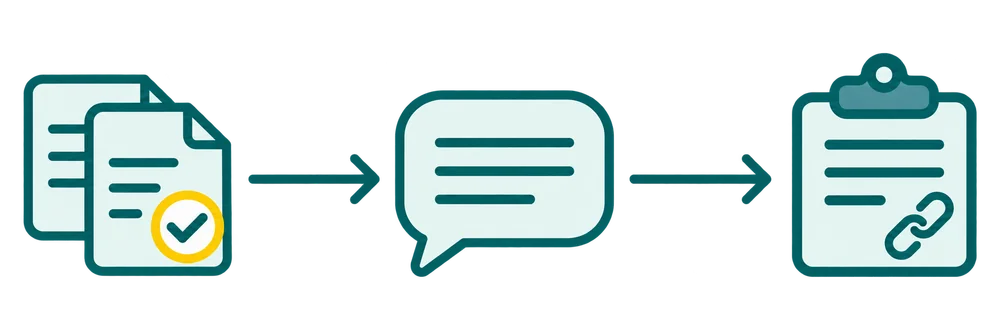
Check the evidence behind an answer and record observed source links with the exact buyer question, platform, and date.
06
Follow the pages after publication
When follow-up is included, I review the changed pages’ search visibility and traffic. Inquiries or sales are assessed separately where tracking is available. A page receiving more visits may still need work on its offer or next step; the guide to website traffic without leads explains that distinction.
I continue to use content research, article updates, and internal linking on Zovovo and Supplement Explained, my own ongoing publishing projects. That work includes returning to published pages to decide what should be revised, retained, or covered elsewhere.
What makes an opening more useful?
Illustrative writing example, not a client result or real business claim.
Before
Our professional team offers high-quality solutions and innovative services.
After
Your product pages get visitors but few purchases? I review descriptions, comparison information and the buying path to find the questions your customers still need answered.
An example from my work
What changed in a Zovovo content refresh
Edited implementation summary · owned website · August 2026
- Before
- Repeated sections made the page harder to use; titles and openings needed a closer match to the search queries.
- Editorial decision
- Consolidate repeated blocks and rewrite priority sections around the reader’s question. Review sources before accepting a draft.
- Related pages
- Add contextual links from relevant articles rather than repeating an identical link block everywhere.
- Publishing check
- Preserve useful media, flag duplicate sections and inspect the finished mobile page. This work is later than the historical growth comparison.
What can the deliverables look like?
These formats are adapted to the agreed scope; they are not published client documents.
- Content plan
- Pages to write or update, their readers, and the main questions to answer.
- Draft and review
- New or rewritten copy with sources, headings, and suggested internal links.
- Publication checklist
- Approved text, page settings, links, and a final check of the published page.
07
Start with one page
Send me the page you’re concerned about, who you want it to reach, and what you would like visitors to do next. For new content, a short description of the topic or service is enough to begin the discussion. An existing draft or writer’s brief is welcome, but neither is required.
Ask about content optimization or email umitkaratay@gmail.com.
Illustrative deliverable excerpt
From query overlap to an editor-ready content plan
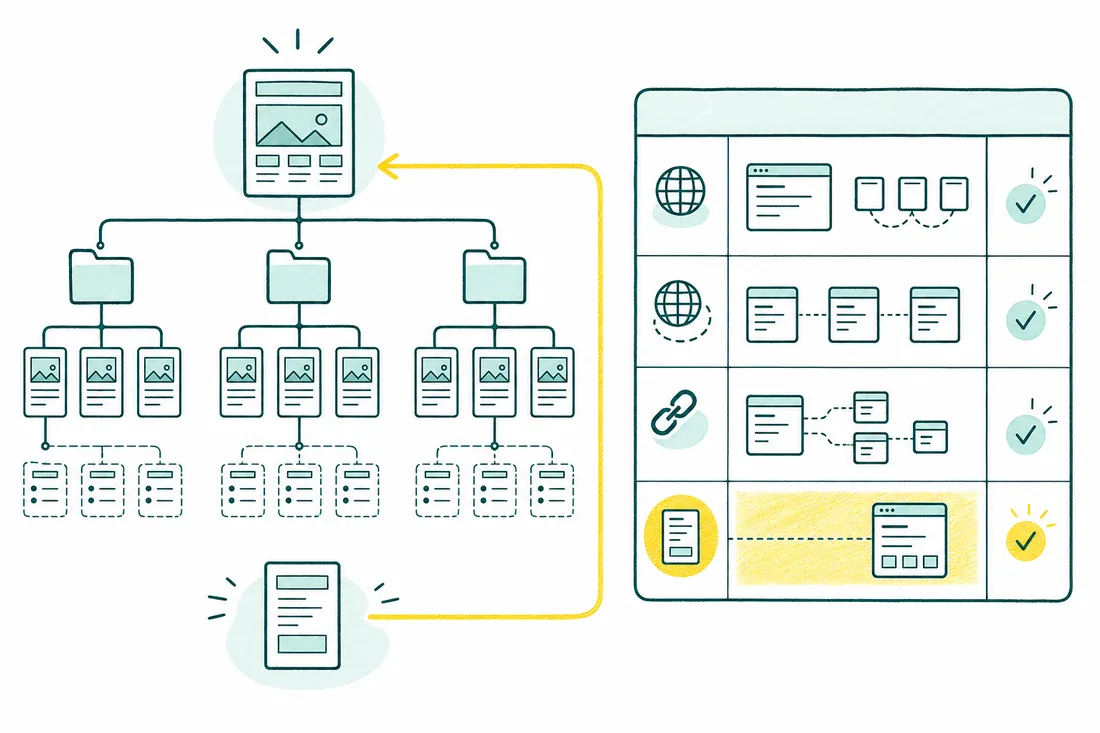
Search Console query and page exports are compared using consistent date, country, and device filters, then checked against crawl relationships and the actual page content. Editors receive a clear keep, merge, refresh, or create decision, with developer tasks separated where redirects or templates are involved.
| Observed signal / URL pattern | Root cause | Action & owner | Verification check |
|---|---|---|---|
| Two guides receive impressions for the same audit-checklist queries, and page review confirms substantial overlap. | Both pages serve the same audience and task, with duplicate sections and competing internal links. | SEO and editor: choose the destination using relevance, useful links, and conversion context; merge unique material. Developer: redirect the retired URL and update generated links. | Confirm the retained page covers the complete task, the retired URL redirects directly, and internal links and the sitemap use the destination. Review query-to-page distribution with consistent comparison filters. |
| A service page receives queries containing 'cost', 'implementation', and 'requirements', but offers only a generic overview. | The page describes the service without helping a buyer judge fit, preparation, scope, or the next step. | Editor and service owner: add verified inputs, deliverables, exclusions, process, and links to relevant package scopes; explain how an estimate is determined. | Check that each priority buyer question has a visible answer in the rendered page. Test the mobile inquiry path and review qualified inquiries alongside the relevant query set. |
| An important guide appears in a sitemap-seeded crawl but is missing from a crawl starting at the homepage without sitemap seeding. | The guide has no crawlable internal links; its tidy directory placement does not make it discoverable. | Editor: add relevant service-to-guide and guide-to-service links. Developer: ensure those links are standard HTML anchors, not interaction-only navigation. | Repeat the homepage-start crawl with the same settings and sitemap seeding disabled. Confirm discovery through HTML links; use crawl depth to assess click distance, not the directory tree. |
Prioritize the inventory with a content SEO audit, resolve overlapping pages with the keyword cannibalization guide, and turn buyer questions into better pages with the service page copywriting guide.
Practical guides
Related SEO guides
Understand the problem, compare your options and choose the right support.
SEO content audit: Which pages should you improve first?
Turn an existing blog or resource library into a clear page-by-page improvement plan.
Read the guideHow to write an SEO content brief
Build a useful SEO content brief with the reader’s task, evidence, competing-page gaps, internal links and a clear review checklist.
Read the guideKeyword cannibalization: When your pages compete and what to change
Separate harmful overlap from useful pages that happen to appear for the same search.
Read the guide