SEO services
Ecommerce SEO services
I help shoppers find your products and decide what to buy. I review product and category pages, search demand, filters and technical issues, then agree the priorities with you.
What will you receive?
- Priority product and category pages.
- Content and technical changes for your platform.
Send the URL, platform, and product range you would like to improve. We can start by email.
01
Ecommerce SEO audits: prioritize products and categories
I begin with the ranges that matter to your business: what you sell, what is available and where you can fulfill orders. I compare that with search demand, competing pages and the categories and products already on your website.
The result is a page-and-template priority list. Illustrative decisions:
| Opportunity | What would go into the work plan |
|---|---|
| A valuable category has products but little useful buying information | Research intent, improve the category and connect suitable buying guides |
| Many products share the same missing information | Fix the shared template or product-data process before rewriting each page |
| A filter has demand and a distinct, useful selection | Review it as a potential landing page with its own content and URL treatment |
| Popular products are unavailable for a long period | Review alternatives, customer expectations and the page’s long-term purpose |
Each priority includes the affected URLs, proposed work, owner and information needed from your team. This lets you compare an individual page update with a template change that affects much of the catalog.
02
Category pages that help shoppers choose
Category optimization can include clearer page titles, useful subcategories, better links to products, and copy that answers a shopping question. I also review whether the page actually presents the products implied by its title.
An illustrative example: consider a store selling office equipment. Someone comparing document scanners needs a usable selection and information about scanning speed or software compatibility. Someone searching for a particular model needs the exact product, specifications, availability, and buying details. I would research your market before deciding which pages to change.
The work might improve an existing collection rather than create another article. My category page SEO guide explains how descriptive copy, product listings, and navigation can work together without burying the products beneath a long introduction.
I check how those pages are connected, too. Google recommends linking through categories and subcategories to products; a product available only through an internal search box may be missed during crawling.
03
Handle filters and duplicate URLs deliberately
Size, color, brand and sorting controls can create many combinations of URLs. I map the actual URL patterns before recommending what search engines should find. The Google faceted-navigation guide explains the crawl implications.
| Page pattern | The decision to investigate |
|---|---|
| A useful product subset matching a distinct search | Whether it deserves a stable, linked landing page |
| The same products in a different order | How to handle the sorting URL and preferred version |
| Empty or near-empty combinations | Whether they should be generated, linked or accessible to crawlers |
| Different addresses for equivalent content | Which version the content, canonical and internal links should support |
I document representative URLs and the proposed rule, then ask your developer to confirm how the platform applies it. The release check covers useful filtered shopping paths as well as search-engine output. Canonical tags and crawl controls serve different purposes; the plan explains the reason for each setting.
If you are comparing platforms or planning a move, the Shopify versus WooCommerce SEO guide shows which catalog and implementation questions to settle first.
04
Give shoppers the product details they need
I can help revise product copy using verified specifications and information from your team. Depending on the range, that may mean clarifying compatibility, materials, dimensions, what is included, or where to find shipping and return information.
Stock changes also need attention. A temporarily unavailable item and a permanently retired product may require different decisions. I review the page’s purpose and available alternatives before recommending what to keep or change.
Where relevant, I check the structured data that describes products to search engines. Google’s product documentation explains how details such as price and availability can appear in search. I look for consistency with the visible page; adding markup does not guarantee a particular search appearance.
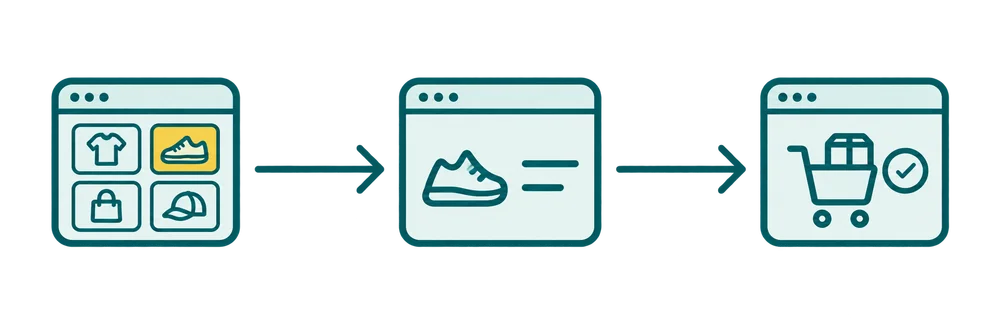
Review each step separately: choosing a product, understanding its details and completing the purchase.
05
Clear responsibilities for implementation
My hands-on platform experience is with WordPress. I can make suitable content, title, and internal-link changes there, after reviewing how the store is built. Work involving a store extension, theme, or custom functionality may need your developer.
For other ecommerce platforms, I can research opportunities, prepare copy and SEO instructions, and coordinate with the person responsible for implementation. I confirm that division before work begins rather than assume that every platform change is included.
Depending on the assignment, you receive finished copy, page-level recommendations, or technical instructions with examples your developer can inspect. After agreed changes are published, I review the affected pages and check the implementation. Advertising and product-feed management are not automatically part of this service.
06
Relevant agency experience
I have more than 10 years of SEO experience, including past agency work on Kliksa and Teknosa. I contributed to the Kliksa SEO project, which received a Bronze MIXX Award.
This experience comes from previous agency roles. I assess your store’s catalog, competition, and development needs before recommending changes.
An example from my work
Technical and on-page work on a large retail catalog
Kliksa · historical agency project · public award record and my role
- Project context
- The award record describes catalog-level issues involving titles, duplicate pages, pagination, broken links and sitemaps.
- My contribution
- Technical and on-page SEO priorities, working with the team to coordinate implementation. The award recognized the wider project, not an individual result.
- Relevant experience
- Connecting product and category-page improvements with the technical work needed to support them.
- Evidence
- The Kliksa case study below links to the IAB award record. I do not have permissioned historical analytics or original client deliverables to publish.
What can the deliverables look like?
These formats are adapted to the agreed scope; they are not published client documents.
- Category opportunity sheet
- Match a commercially important category to its search intent, competing page types and relevant product range.
- Template recommendations
- Specify title, heading, category copy, internal-link and crawl priorities, with example URLs for the team.
- Post-change checks
- Verify the published category and affected product paths. Compare organic landing-page trends separately from sales attribution.
07
Judge progress beyond a ranking report
I report on the categories and products we worked on, with the release dates beside the search data. Relevant queries, impressions and clicks show how discovery changes. Correctly configured ecommerce data can show the orders and revenue associated with organic visits.
Stock, promotions and seasonal demand help explain the comparison. If traffic improves but purchases do not, I review the product information and shopping path with your team. The next recommendation should follow what is happening in that range.
For a focused assignment, we agree on the pages or template and the handoff. For ongoing support, we use findings and the available capacity to choose the next work. You can start by sharing one category or product group.
08
Start with the part of your store you want to improve
Share your website, the products you want to sell more of, and what you are noticing. It is also helpful to know whether you have a developer or content team. I will follow up in writing with questions and a proposed starting scope.
Illustrative deliverable excerpt
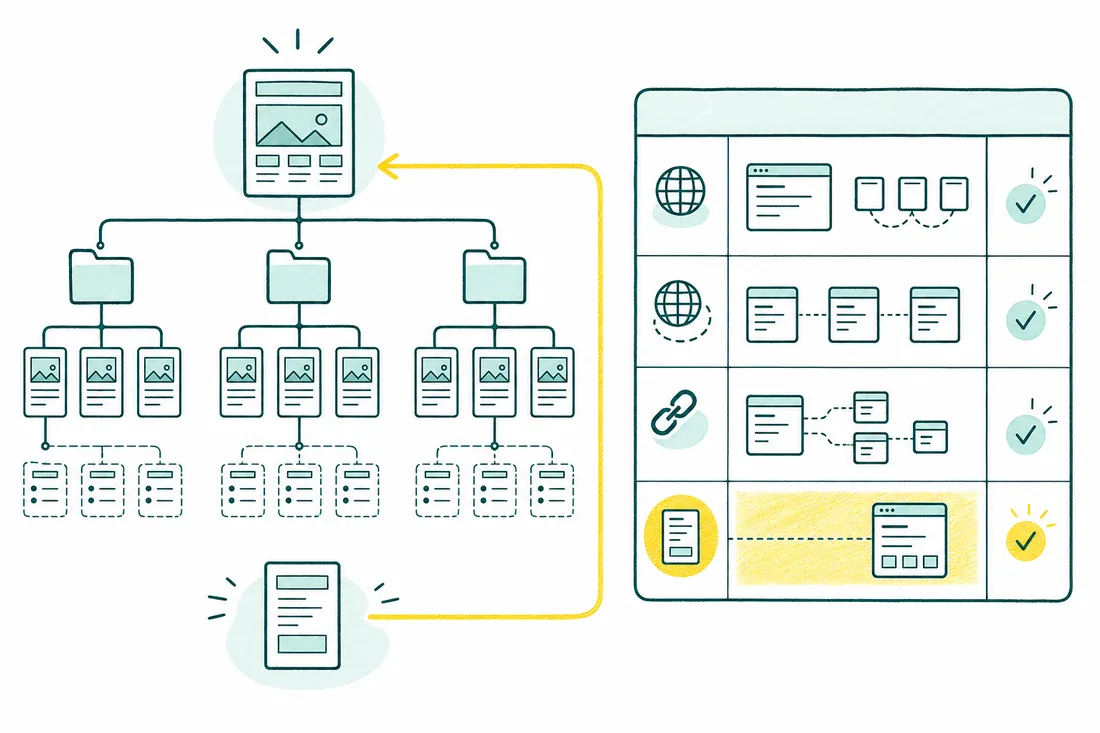
Find crawl waste and conflicting product signals
I compare crawl paths, product pages, and Merchant Center data so each finding leads to a specific implementation task. The handoff identifies who makes the change and how to verify it.
| Observed signal / URL pattern | Root cause | Action & owner | Verification check |
|---|---|---|---|
/collections/boots?color=black&size=9&sort_by=price-ascending is linked and self-canonical; reordered parameters produce additional 200-status URLs. | The filter interface exposes every combination as a crawlable link, while the template treats sorting URLs like curated collections. | SEO consultant defines which facets should be indexable. Developer removes unnecessary crawlable combinations and points true duplicate sorting URLs to the appropriate canonical collection. | Re-crawl from category navigation. Compare parameter URLs, internal links, and click depth—not directory depth—and confirm approved facets remain discoverable with the intended canonical. |
Merchant feed item WB-BLK-9 reports in_stock; its selected variant is unavailable on the landing page, while Offer markup still reports InStock. | The storefront, feed export, and structured-data cache update on different schedules. | Commerce developer and feed owner align variant availability with the inventory source, refresh the feed and markup, and ensure the item link preserves the selected variant. | Compare the same item ID across inventory, the fetched variant page, Offer availability, and Merchant Center's processed product data after the refresh. |
| Two separately sold boot models use the same supplier description, although their fit, materials, and intended use differ. | The product import copies supplier text without an editorial step for product-specific buying information. | Product editor adds verified fit, material, and use-case details. SEO consultant keeps distinct products separate and reserves consolidation for genuinely duplicate URLs. | Compare rendered descriptions and specifications side by side. Confirm each distinct product retains its own canonical URL, identifiers, and accurate buying information. |
Use the faceted navigation guide to decide which filter URLs belong in search, and the Merchant Center free listings guide to align product data. The duplicate product descriptions guide covers when to rewrite descriptions, keep products separate, or consolidate true duplicates.
Practical guides
Related SEO guides
Understand the problem, compare your options and choose the right support.
Faceted navigation SEO: Which filter pages should Google find?
Separate useful search landing pages from filter combinations that only multiply URLs.
Read the guideShopify SEO audit: Check the pages that matter to sales
Investigate collections, products, variants and app changes before buying another SEO app.
Read the guideGoogle free product listings: Why are your products not showing?
Check product eligibility, page information and feed consistency before assuming the problem is rankings.
Read the guide