
Use this guide to compare website proposals, identify missing evidence on your current site, and assign responsibilities before development starts. Work through the service structure, inspection explanations, and mobile intake checks before approving a design.
Show the work homeowners cannot inspect themselves
Homeowners are buying work they cannot easily inspect from the ground. Show the roof, not a stock house. Publish original before, during, and finished photos from the same job, with the roof material, approximate neighborhood, problem, and work completed. Explain whether the job was a localized shingle repair, a tile-roof replacement, or a flat-roof drainage correction.
Do not publish a home's precise address without permission; strip location metadata from residential photos before upload. Get appropriate permission for people and property shown. The roofing owner verifies project facts, the editor writes captions and descriptive alt text, and the developer supplies appropriately sized, compressed images. Do not load the entire gallery at once on mobile.
Place relevant projects beside each service and contact option, not just in a gallery. Identify the people doing the work, verifiable credentials where applicable, and the business name that will appear on the estimate. Google's SEO Starter Guide provides a foundation for descriptive image text and clear page organization. Captions should explain the actual job, not repeat a city keyword.
Give urgent leaks and planned projects different routes
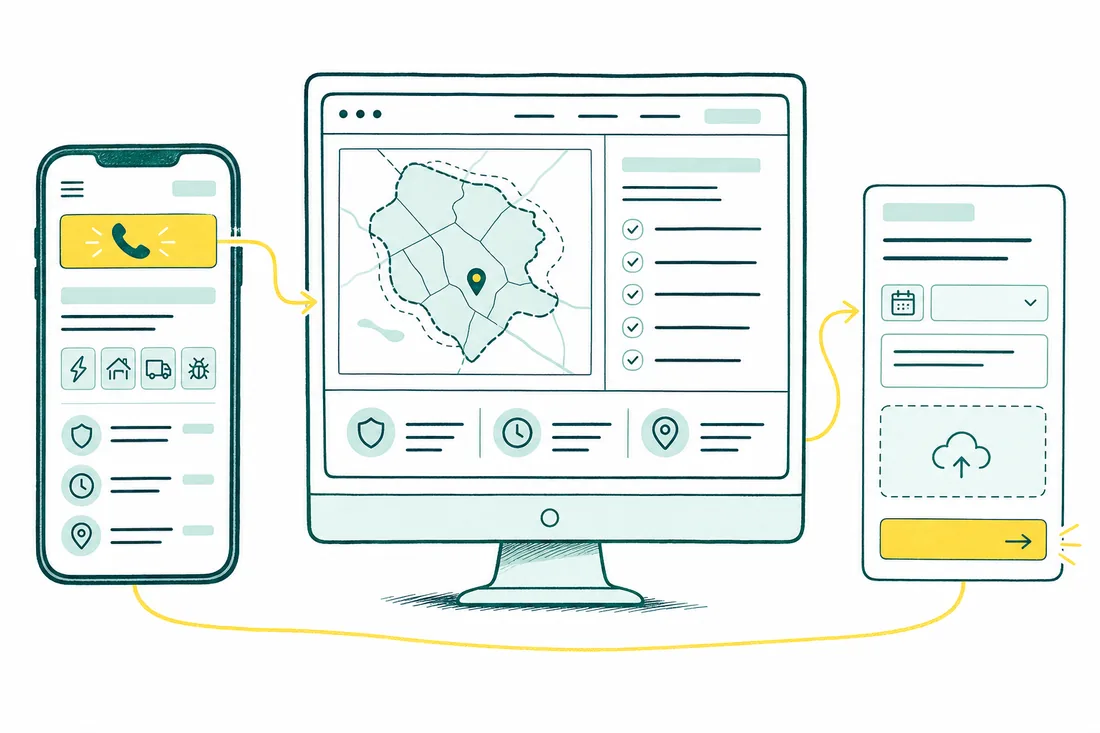
Make the first mobile choice clear: “My roof is leaking now” or “I need a planned estimate.” Separate immediate callouts from planned estimates. Active leaks and storm damage need a prominent phone option, actual staffed hours, and an honest service boundary. Explain what happens after hours instead of advertising emergency availability you cannot support.
Route replacement, insulation, and gutter inquiries through service-specific explanations into the quote flow. Ask for the job type, ZIP code, preferred timing, and a short problem description. Let homeowners choose “not sure” for material or roof size. Make photo uploads optional, and never ask someone to climb onto a damaged roof to provide them.
Test both journeys from the homepage on a real phone. Does the call button open the right number? Does each request reach the correct person, with the appropriate confirmation message? The owner sets response expectations; the developer tests phone links, conditional routing, and delivery logs. A success screen alone does not prove an inquiry reached the inbox.
Make inspections, estimates, and warranties understandable
Explain the inspection rather than relying on “free estimate.” Say who schedules it, what access is needed, how unsafe or inaccessible areas limit the assessment, and what the homeowner receives. Separate photographed findings, recommended work, and estimate line items. If an inspection or emergency callout has a charge, disclose it before booking and keep telephone explanations consistent.
Separate workmanship coverage from the manufacturer's product warranty. Name the responsible party, duration, covered work, exclusions, maintenance requirements, and claim contact. State whether coverage transfers when the home is sold. The website summary must match the written terms attached to the quote; “fully guaranteed” does not explain who handles a later leak.
The written estimate should identify tear-off, disposal, underlayment, flashing, ventilation, and permit responsibilities. Explain how concealed damage, such as deteriorated decking discovered during removal, is priced and approved before extra work proceeds. The owner approves technical and commercial terms, the editor makes them readable, and the developer publishes the current version while removing obsolete warranty downloads.
Separate services without multiplying city pages
Create separate repair, replacement, insulation, and gutter pages when their offers genuinely differ. On an illustrative contractor site, compare https://example.com/roof-repair/ with https://example.com/roof-replacement/: both should return 200, have distinct titles and main headings, and reference themselves with rel="canonical". Do not point repair's canonical to replacement. The service-page copywriting guide explains how to differentiate the content.
Adding a service area is not a town-name substitution exercise. Before creating a city page, gather local projects, actual travel limits, and useful service details. If there is nothing distinctive to publish, describe coverage on the existing service page. Follow the service-area page guidance rather than publishing cloned pages or implying an office in every town.
Check address claims against Google Business Profile guidelines. A rented mailing address is not a staffed branch. A service-area roofer that does not receive customers at its base should hide that address on its profile. The owner verifies actual operations; the editor and developer check that business names, phone numbers, and coverage remain consistent across the website and profile.
Compare build scope and test the complete inquiry process
Compare build proposals by deliverables, not homepage mockups. Ask whether service templates, project examples, inspection and warranty information, and both inquiry paths are included. Assign copywriting, photo preparation, and approval responsibilities. You should be able to add completed jobs after launch and retain control of the domain, hosting, analytics, and administrator accounts.
Record valuable existing URLs and inquiry sources before rebuilding. Map changed URLs to relevant destinations with direct 301 redirects, then test them after launch. The website redesign guide explains that migration planning. Require recorded mobile checks for readability, phone links, upload limits, spam protection, and successful form delivery, not just a responsive preview.
When reviewing the business website package, clarify inclusions and separate responsibilities for photography, ongoing SEO, maintenance, and content updates. Measure qualified inquiries by service and area, not traffic alone; avoid sending personal details to analytics. The consultant defines page and measurement requirements, the roofer approves service promises, and the developer implements and tests them.
Pre-implementation verification checklist
- Test urgent-call and planned-quote journeys on a real phone, including after-hours messaging and delivery to the right inbox.
- Approve real project photos, material and neighborhood captions, publication permissions, and removal of residential location metadata.
- Match published inspection and warranty explanations to the contractor's actual process, current written terms, and available response hours.
- Document existing URL destinations, content owners, account access, and launch acceptance tests before signing the build scope.
Frequently asked questions
Can we rely on a Google Business Profile instead of a website?
A Business Profile can help homeowners find you, but it cannot replace detailed repair guidance, project histories, or written warranty explanations. Use the profile and website together, with consistent business details and a relevant destination link. A service-area contractor should not publish a residential address merely to appear more established.
Do we need a separate page for every town we serve?
No. Start with accurate service coverage and strong repair and replacement pages. Add a town page only when you can show work there and provide genuinely useful local details, such as service availability or roofing conditions you actually handle. Changing a town name in otherwise identical copy is not a useful expansion plan.
Should emergency repairs and roof replacement share a form?
Not as an identical sequence. An active leak needs a prominent phone option, honest availability, and a short description of the problem. Planned replacement inquiries can ask about material, property location, and timing. They can use the same form system, but the visible fields, confirmation message, and internal routing should match the request.
What should a roofing website proposal include?
Ask for named page templates, content responsibilities, photo handling, mobile form behavior, and a migration plan for existing URLs. Confirm who owns the domain, hosting, analytics, and website access. The proposal should define acceptance tests and ongoing maintenance separately, so a polished mockup is not mistaken for a complete, working lead process.