SEO services
International SEO consulting
Expanding into another country? I research how customers search there, which pages you need and how to organize your website’s language versions.
What will you receive?
- Search and page priorities for each market.
- Language-version checks and editorial requirements.
Start by email with your website, what you sell, and the countries you want to reach.
01
Which countries should your international SEO target?
I start with the countries where you can serve customers and the offer available in each. Delivery, stock, payment, support and local terminology belong in the same decision as search demand.
You receive a market-and-page plan:
| Decision | What I compare |
|---|---|
| Which market to develop first | Relevant demand, competing pages and your ability to fulfill the offer |
| Which pages to use | Existing pages, distinct customer needs and gaps in the current structure |
| What needs adapting | Terminology, buying information, examples and the contact or purchase route |
| What the team needs to supply | Approved local business details, language review and implementation ownership |
If you already attract visits from a country, I review which pages and searches bring them. The recommendation explains why a market deserves attention and what would be needed to pursue it. We can begin with one country or improve an existing language version.
02
International keyword research and local search intent
A translated keyword is a starting hypothesis. I check the phrasing people use, the results they encounter, and the information they need before choosing a supplier or product. A country and a language are separate choices: an English-language page may serve more than one market, while one market may need several language versions.
An illustrative example: imagine an equipment supplier considering two markets. If research shows that buyers in one expect a purchasable product catalog while buyers in the other need specifications and a project quote, a direct translation would leave an important gap. The page type, buying information, and next step may all need to change.
My international keyword research work connects relevant searches to page purposes. Your team receives a reason to adapt, keep, or create a page, rather than a list of foreign-language phrases to insert.
03
Decide what to keep, adapt, and add
A useful international plan preserves pages that already meet the need and identifies the details that must change for a new audience.
Illustrative adaptation: an equipment supplier uses the same product across two markets. One version may need locally used terminology, compatible specifications and available delivery options. Another may need project-estimate information and the documents procurement teams request. The actual research and your offer determine that difference.
The handoff maps the existing URL to its intended language or regional counterpart and records the content changes. An unmatched page is flagged: it may need its own version, a different destination in language navigation or further research.
That map connects the international keyword research to writing and technical implementation. For stores, it also accounts for the categories and products you actually sell in each market through an agreed ecommerce SEO scope.
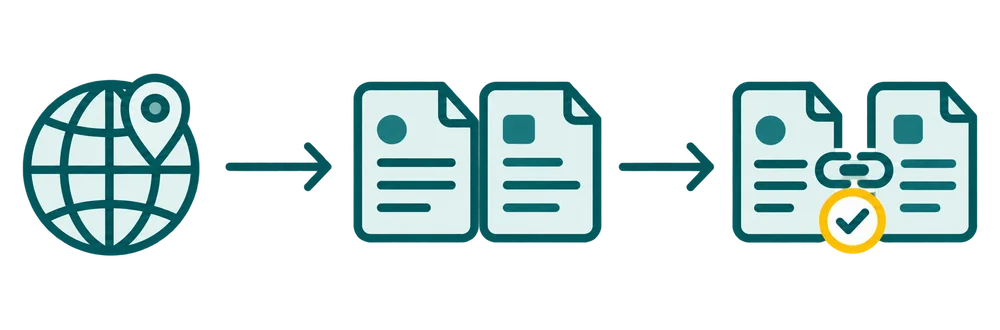
Research the intended market, adapt the page to the buyer’s needs and check how language versions connect.
04
Check how language and regional versions connect
Technical work should support the market and content decisions. I review whether the intended versions are accessible and how search engines are being told about them.
Hreflang identifies alternate language or regional pages. I check whether the right URLs are paired, including reciprocal references. Google’s localized-versions documentation explains these relationships.
Canonical signals identify a preferred version of similar pages. I review whether they conflict with the versions you want available in search. Google’s canonical guidance recommends a suitable same-language canonical when using hreflang; pointing every translation to the original language deserves careful review.
I also check navigation between versions, redirects, important internal links, and access to localized content. Google recommends distinct URLs for language versions and user-selectable language links, rather than relying on automatic language redirects.
A country domain, subdomain, or subfolder is assessed against the existing site and practical maintenance needs. I do not assume a new domain is necessary, or recommend changing established URLs without a clear reason.
05
Work with your editors and developers
I handle the search research, page recommendations and SEO review. Your writers and developers can use a shared handoff with three parts:
| Team member | Information they receive |
|---|---|
| Writer or local editor | Intended reader, page purpose, terminology, sources and business facts to confirm |
| Developer | URL pairs, language links, relevant canonical and hreflang requirements |
| Marketing owner | Page priorities, unresolved decisions, responsibilities and release status |
Local language review is arranged with the person who can check terminology and market fit. I can work with your existing editor and make suitable WordPress changes. Custom development goes to your developer with specific requirements.
After publication, I check the agreed page relationships and the published copy. The content development service can cover finished writing where that is part of the assignment.
06
Agency experience and independent publishing work
I have more than 10 years of SEO experience, including agency work at GroupM Istanbul. My current independent work includes research, content improvements, and technical SEO, alongside ongoing development of my own Turkish- and English-language publishing projects.
I am based in Tallinn, Estonia, and work remotely. Recommendations, questions, and progress are shared in writing so your marketing, editorial, and development teams can refer to the same decisions.
An example from my work
How this site’s language map works
Live implementation · umitkaratay.com · EN / TR
- English markets
- US and UK keyword demand researched separately; one English page per service, without duplicate country pages.
- Turkish market
- Turkish search intent and competing service pages researched independently, not inferred from translated search volumes.
- Page pair
- /services/international-seo/ ↔ /tr/hizmetler/uluslararasi-seo/
- Technical check
- Matching language navigation, reciprocal hreflang and self-referencing canonicals. These signals do not guarantee indexation.
What can the deliverables look like?
These formats are adapted to the agreed scope; they are not published client documents.
- Market and URL map
- Match each language or market to its intended page and search intent, rather than duplicating every keyword.
- Technical checks
- Record language targeting, reciprocal hreflang, canonical alignment and internal links between equivalents.
- Local review
- Flag copy that needs a native-language review. Compare results by market instead of combining incompatible audiences.
07
Measure the markets we are actually working on
I review relevant pages and search performance by target country, then consider identifiable inquiries or purchases where tracking is in place. I keep the country of the search separate from the language of the page rather than assuming one proves the other.
Reporting also distinguishes new pages from updated versions and identifies work awaiting implementation. If international visits are growing but inquiries are not, the next review may focus on the offer, language, product availability, or contact process. Aggregate traffic alone should not hide what is happening in the market we chose to develop.
Can we focus on one country or an existing language version?
Yes. A project can cover market research, a defined set of localized pages, or an investigation of your current multilingual structure. Ongoing support is another option. I outline the research, content, local review, development dependencies, and follow-up before quoting the work.
Do we need a separate website for each country?
Not automatically. I assess whether the audiences and offers require separate versions and whether the current structure can support them. The aim is a site your team can maintain, with useful pages for the customers you can serve.
08
Share your expansion plans or the problem you are seeing
Send your website, the target countries and languages, and whether you already have localized pages. Let me know who handles content and development. I will follow up by email to define a suitable first assignment.
Illustrative deliverable excerpt
Trace locale URLs from crawl to quote request
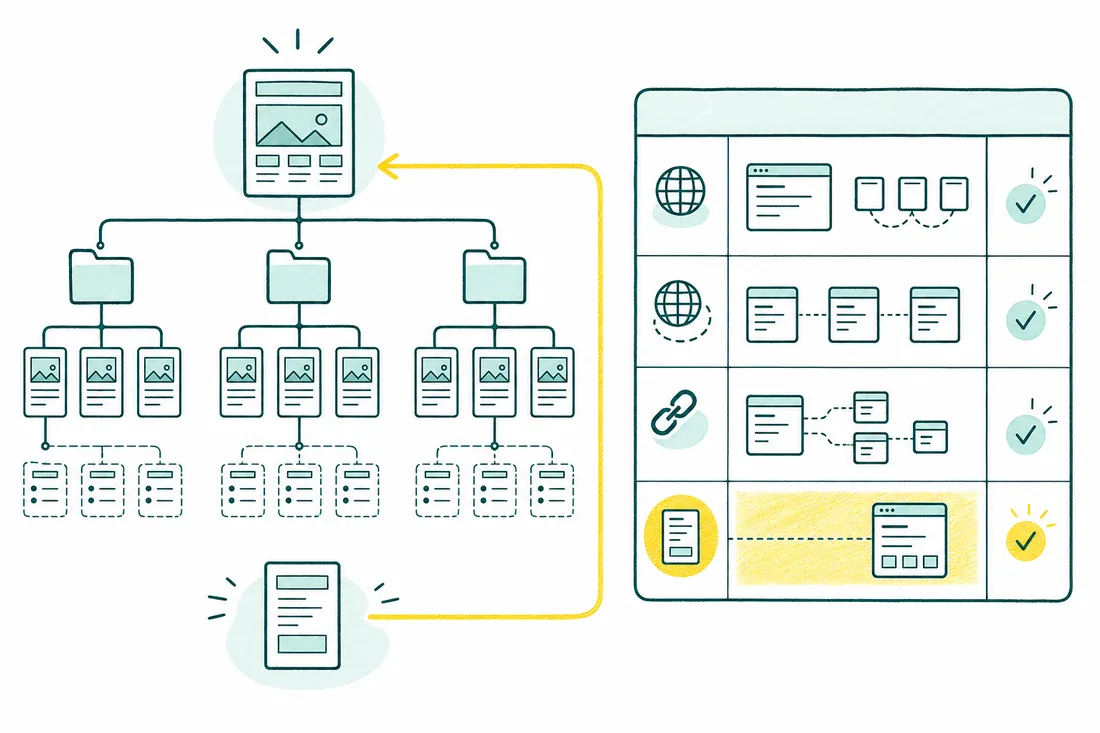
I check whether each market's pages are accessible, correctly connected, and useful to local buyers. The deliverable separates routing and hreflang fixes from the work owned by local editors and sales teams.
| Observed signal / URL pattern | Root cause | Action & owner | Verification check |
|---|---|---|---|
/en-us/products/pump/ lists /tr/urunler/pompa/ as tr-TR; the Turkish page omits the return en-US reference and declares the English URL as canonical. | The locale template inherits the English canonical, while alternate links are maintained separately on each page. | Developer gives each equivalent language page its intended self-referencing canonical and generates reciprocal, absolute hreflang references. SEO consultant maintains the approved URL-to-locale mapping. | Fetch every URL in the cluster. Compare status, indexability, canonical target, language-region codes, self-references, and return references; then review Google's selected canonical after recrawl. |
A US-region request for /de-de/ receives a 302 redirect to /en-us/, even though the visitor requested the German URL explicitly. | IP-based locale middleware overrides explicit URLs, including requests from crawlers using US infrastructure. | Developer keeps explicit locale URLs accessible from any region and replaces forced location redirects with a language or country suggestion that visitors can dismiss. | Request the same German URL from US and German regions with cookies cleared. Compare response chains and rendered language, then use GSC's live test to check crawler access. |
The US product page uses literal translations of supplier terminology, while the quote form accepts only +90 phone numbers. | Translation was completed without US search-intent research, and form validation was inherited from the Turkish site. | US-market editor validates product terminology against buyer searches and sales language. Developer supports international phone entry; sales owner confirms territory and inquiry routing. | Compare target queries with the page's terminology and offer. Submit US and Turkish test inquiries, check validation, and confirm each reaches the correct sales team. |
Start with the multilingual SEO checklist for URL and locale mapping, then use the hreflang guide to validate reciprocal clusters. The translation vs. SEO localization guide explains which market-specific content and conversion details translation alone misses.
Practical guides
Related SEO guides
Understand the problem, compare your options and choose the right support.
Multilingual SEO Checklist: Pre- and Post-Launch QA
Check language URLs, hreflang, canonicals, localized customer journeys, and indexing before and after a multilingual site launch.
Read the guideWebsite Translation vs. SEO Localization
Decide which pages need translation, which need SEO localization, and what to check before entering a second market.
Read the guideInternational keyword research: Planning for a new market
Research keywords by country, language and buying intent. Learn how to validate local terms, compare demand and choose pages for the markets you can serve.
Read the guide